
AI DATA CENTERS: WHY FIBER IS BOOMING
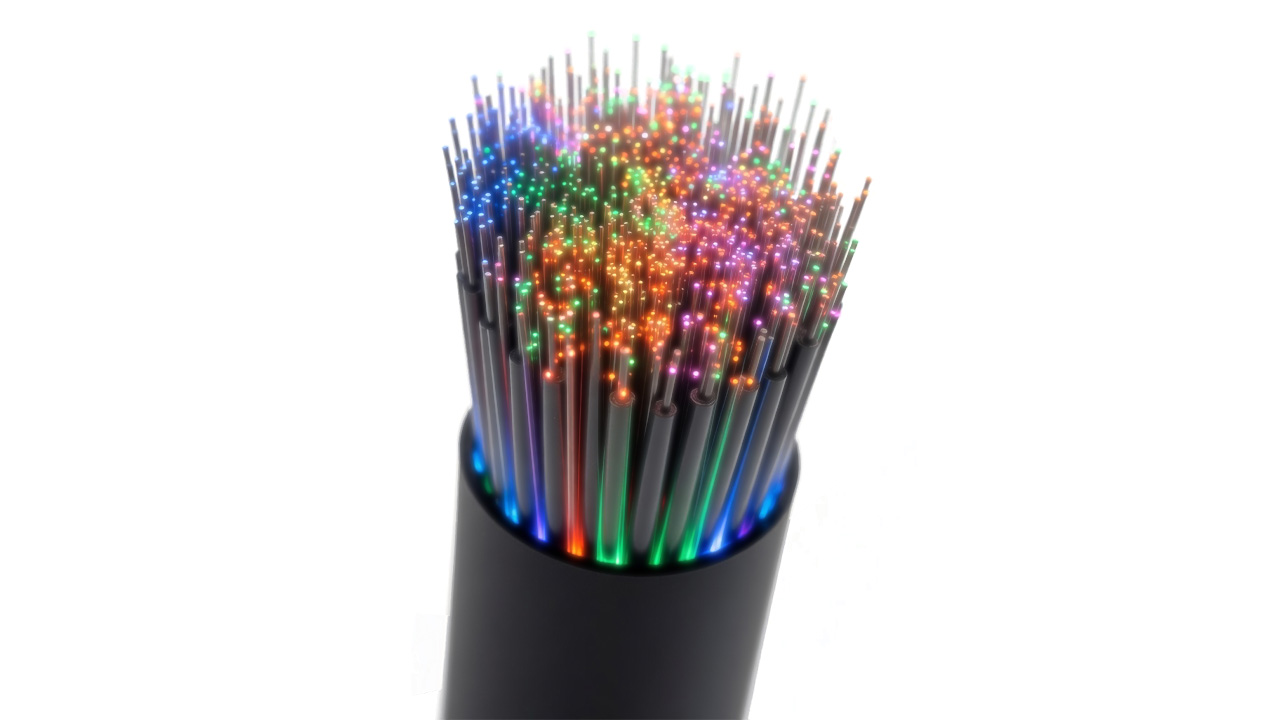
AI data centers are experiencing the largest expansion of fiber optic infrastructure in history. The extreme bandwidth and interconnect demands of AI workloads exceed what copper can deliver across the long distances required to link GPUs, storage, and switching systems. This has driven rapid growth in high fiber count ribbon and loose tube cables, where even small manufacturing defects can lead to significant downstream cost.
Fiber optic cable manufacturing involves handling many delicate materials: filaments, ribbons, binder yarns, water-blocking tapes, strength members, films, and jackets. All of them must be unwound, guided, combined, wrapped, filled, or rewound under controlled tension. Without proper tension control, quality quickly fails.
THE NATURE OF FIBER OPTIC CABLE MANUFACTURING
Fiber manufacturing is not a simple discrete assembly process. It is a coordinated handling process where multiple narrow materials run together, each sensitive to tension and stability.
Fiber Payoff and Handling
Optical fiber begins as a very delicate filament paid off under extremely low tension. Too much tension creates microbends, which often remain hidden until attenuation testing or field use. Low-range tension transducers are required to measure and maintain these very small loads.
Ribbonizing, Binding and Tape Wrapping
When fibers are grouped into ribbons or buffer tubes, additional layers are introduced:
- Binder yarns
- Water-blocking tapes
- Shielding tapes
- Ripcords
These layers behave like narrow webs. Differential tension leads to wrinkles, telescoping, registration drift, skew, and thickness variation.
Filling, Stranding and Jacketing
Loose tube or ribbon stacks move through filling, stranding, extrusion, and cooling. Heat, shrinkage, viscosity, and drag forces introduce what are known as phantom tension sources. Cooling troughs add water drag that alters tension unless monitored and controlled.
Final Take-Up and Packaging
Winding must be uniform from start to finish. Varying tension at the winder produces:
- Dished or collapsed coils
- Crushed layers
- Distorted geometry
Good winding depends on stable, predictable incoming tension.
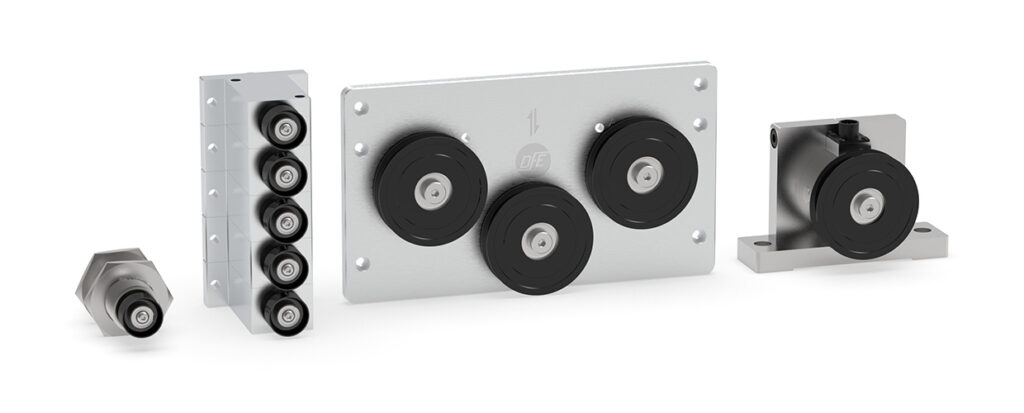 Low Tension Load Cells for Filament or Ribbon Applications
WHY TENSION CONTROL IMPACTS QUALITY AND YIELD
Most chronic fiber cable defects trace back to poor tension control:
- Microbending and attenuation
- Ribbon skew or thickness variation
- Wrinkles in water-blocking tapes
- Out-of-round strand geometries
- Jacket concentricity errors
- Crushed layers during winding
These issues often escape visual inspection and appear only during OTDR or in-line attenuation testing, making them costly to correct.
TENSION CONTROL OPPORTUNITIES & TECHNOLOGIES
Low-Tension Fiber Payoff
Fiber payoff commonly operates in the sub-newton range. Conventional load cells lack the precision required. Low-tension transducers designed for filament processes provide the required stability.
Benefits:
- Prevents microbend-induced signal loss
- Improves ribbonization
- Reduces breaks and stoppages
Tape, Film and Binder Layer Control
Materials used in cable construction behave like narrow webs and are sensitive to improper tension.
Typical tension-related issues:
- Uneven tension causes wrinkles
- Excess tension causes neck-down or breaks
- Low tension causes slack loops, folds, or misregistration
Independent tension zones using load cells, brakes, and controllers prevent error accumulation across layers.
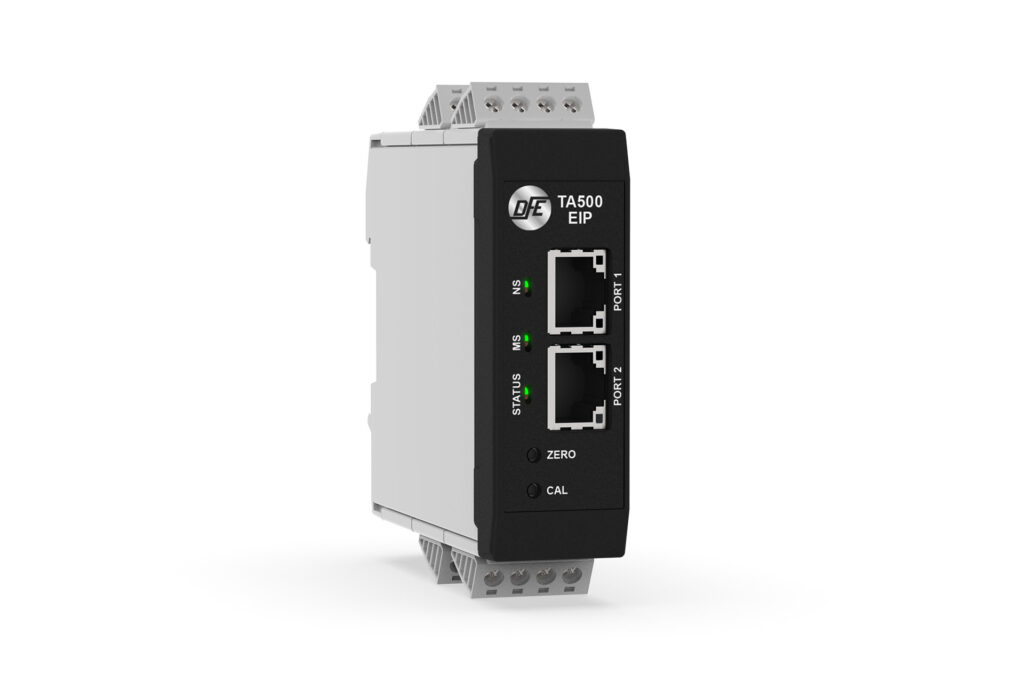 TA500 High-Performance Load Cell Amplifier
Closed-Loop Control with Intelligent Amplifiers
Modern tension amplifiers provide drift-free, high-precision control with digital interfaces. DFE devices like the TA500-EIP tension amplifier support push-button zeroing and calibration along with 16-bit tension measurement and support for advanced PLC integration.
Where this helps:
- Lines with multiple spans
- Processes affected by temperature or drift
- Any operation requiring stable, repeatable control
- Failover, alarm and diagnostic capabilities
Extrusion and Cooling Zones
Extrusion introduces melt drag, thermal shrinkage, and pressure-related tension variations. Cooling troughs add water drag. Both must be addressed using measurement and closed-loop actuation before and after these zones.
High-Quality Winding
Winding is a major source of defects when tension is inconsistent. Problems include crushed layers, uneven packs, and poor traverse. Closed-loop winding systems maintain consistent geometry from the core to the full package.
A PRACTICAL FRAMEWORK FOR FIBER OPTIC LINES
Key practices:
- Define clear tension zones
- Measure tension in every critical zone
- Close loops around the correct actuators
- Provide proper guiding to reduce lateral wandering
- Use unwind and rewind strategies tailored for delicate materials
Although fiber lines look different from traditional web lines, the physics are the same. Tension is torque divided by radius, and upstream effects influence everything downstream unless isolated.
SUMMARY
The rapid fiber expansion driven by AI data centers requires manufacturers to produce precise geometry, low attenuation, and high yield. Fiber optic cable manufacturing depends on tight tension control across many delicate layers. By using modern low-tension transducers, intelligent amplifiers, and well-designed tension control zones, manufacturers can reduce defects, improve consistency, and increase throughput.
WHY CHOOSE DOVER FLEXO ELECTRONICS?
With decades of expertise in tension control technology, DFE is a trusted partner for fiber optic cable manufacturers worldwide. Our innovative solutions, including the TriWheel™, LT transducer, VNW transducer, TA500 load cell amplifier and SteadyWeb™ 6 controller, are designed to meet the unique challenges of modern manufacturing. By investing in DFE’s tension control systems, you can enhance efficiency, reduce costs, and deliver superior products to your customers.