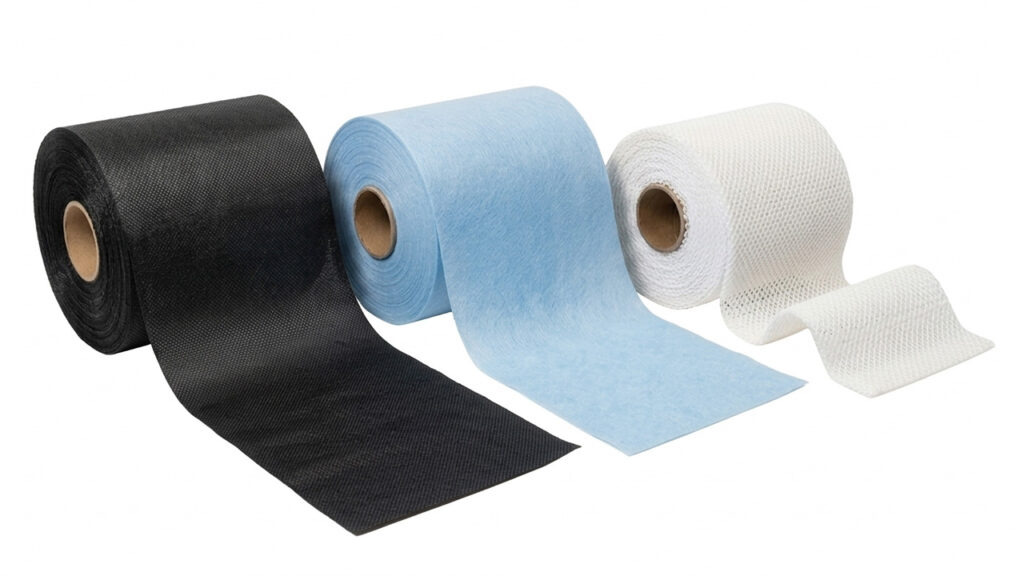
If you are chasing defects that appeared when you changed materials—or defects that refuse to disappear despite better alignment, tighter tension, or “more control”—you are almost certainly asking a technical textile to behave like a traditional web.
From a web‑handling standpoint, that is the wrong approach.
Technical textiles are not simply higher‑value nonwovens. They are structural webs, and structures respond to tension very differently than sheets. Understanding when, where, and why to control tension is the difference between stabilizing a process and quietly storing defects for later.
STRUCTURE FIRST, TENSION SECOND
Traditional webs (films, paper, many commodity nonwovens) behave like continuous materials. When you pull on them, the load distributes fairly uniformly. Technical textiles do not. They are:
- Fiber networks
- Yarn structures
- Laminates with dissimilar layers
When tension is applied, load redistribution happens non‑uniformly across the width. Some lanes stretch. Some do not. Some store strain. Some release it later. This is why tension control matters more for technical textiles—but also why higher tension almost always makes things worse.
In technical textiles, tension does not just “hold the web flat.” It actively changes the web.
TENSION WINDOWS: NARROW, NON-LINEAR AND UNFORGIVING
One of the most common mistakes I see is assuming that better tension control means running higher tension more precisely. That logic works for films. It often fails for technical textiles. Most technical textiles have:
- Low tensile modulus
- Permanent deformation at modest strain
- Nonlinear stress–strain response
This means the acceptable tension range may be very narrow—and crossing the upper limit causes permanent damage, not temporary instability. So the first rule of tension control for technical textiles is: Control tension because you must—not because you can.
If the process does not require tension (registration, coating uniformity, traction), then tension is only serving to hide geometry problems upstream.
WHERE TENSION CONTROL BELONGS (AND WHERE IT DOESN’T)
Unwind Zone
Tension control at unwind exists to:
- Prevent slack
- Maintain steering authority
- Decouple roll diameter changes
It does not exist to:
- “Pre‑stretch” the web
- Fix baggy lanes
- Compensate for poor roll quality
For technical textiles, unwind tension should be as low as possible while still maintaining control. Anything higher simply introduces stored strain before the web ever reaches the process.
Process Zones (Coating, Laminating, Slitting, Treating)
This is where people get into real trouble. In process zones, tension should be controlled only to the level required by the physics of the process:
- Coating uniformity
- Lamination wet‑out
- Slitting traction
- Thermal stability
Excess tension in a process zone does not improve quality—it locks in non‑uniform strain that will show up later as wrinkles, curl, or winding defects. If your defect shows up downstream, ask yourself: “What process zone tension allowed this web to permanently change shape?”
Rewind Zone
Winding is not where most defects are created. It is where they are revealed. Technical textiles are often:
- Compressible
- Prone to layer slip
- Sensitive to trapped air
Flat tension profiles that work for films often fail badly here. Many technical textiles require:
- Tension taper
- Diameter‑dependent control
- Careful management of nip load and air entrainment
If rewind tension is used to “fix” upstream problems, the roll will look acceptable—until it is unwound later. That is not success. That is deferred failure.
WRINKLES: WHY TENSION CONTROL OFTEN MASKS THE ROOT CAUSE
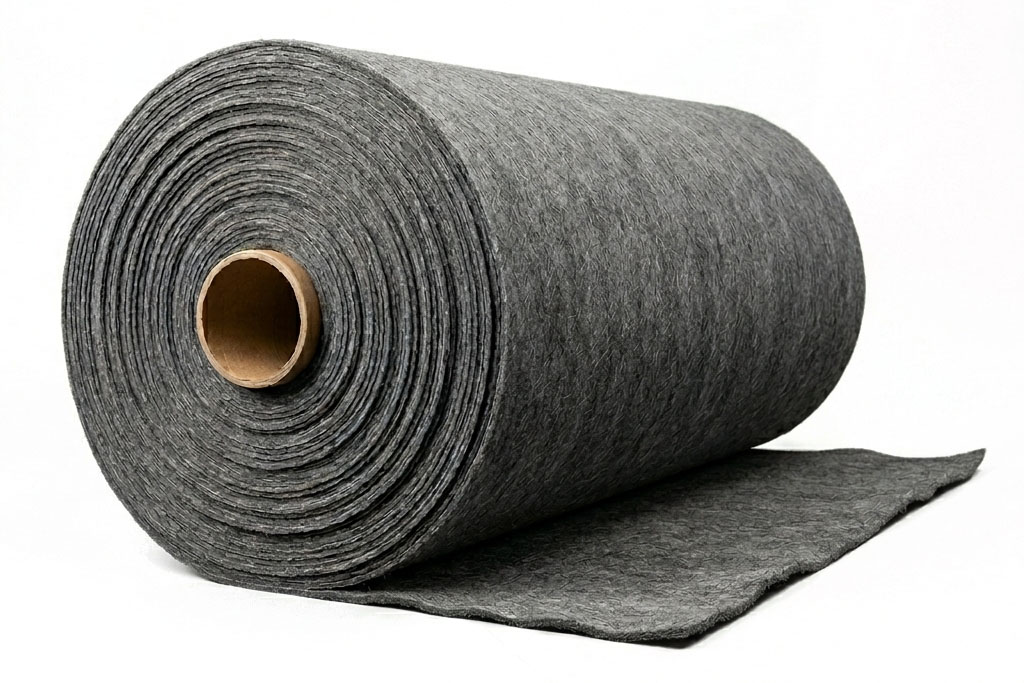
Wrinkles in technical textiles are rarely caused by low tension. They are caused by cross‑web length variation. Tension can suppress wrinkles temporarily by forcing longer lanes to conform. But when tension changes—speed shifts, diameter changes, or storage relaxation—the wrinkle appears. This is why wrinkles often:
- Appear late in the process
- Show up at rewind or unwind
- Seem unrelated to where they were “created”
The correct use of tension control here is diagnostic:
- Reduce tension and observe behavior
- Change span geometry and observe response
- Identify where the web first becomes non‑uniform
Tension is not the fix. It is the flashlight.
LOAD CELLS, DANCERS AND FEEDBACK: TOOLS, NOT SOLUTIONS
Closed‑loop tension control is essential for technical textiles—but only when it is properly applied. Load cells tell you what force the web is experiencing. They do not tell you whether that force is appropriate. Dancers absorb transients. They do not eliminate stored strain. Feedback systems reduce variability. They do not make a bad tension target good. If you do not understand why a tension setpoint exists, controlling it tightly just guarantees repeatable defects.
SLITTING AND LANE-TO-LANE TENSION EQUALITY
After slitting, technical textiles often behave as multiple independent webs, even if they remain adjacent. If lane‑to‑lane tension is unequal:
- Some lanes stretch
- Some lanes relax
- The winder builds unevenly
This is why winding defects often appear only after slitting. Tension control must be:
- Measured per lane when possible
- Designed to minimize differential strain
- Supported by geometry that does not amplify small differences
You cannot fix lane imbalance at the winder. You can only reveal it.
THE CORE PRINCIPLE
Here is the principle that governs tension control for technical textiles: Use the lowest tension that accomplishes the process objective, and use geometry—not force—to create stability.
If tension is doing the work of rollers, guides, spreaders, or machine alignment, the web is paying the price. And technical textiles always remember.
FINAL THOUGHTS
Tension control is essential for technical textiles—but it is not a blunt instrument. It is a precision tool, and precision tools require restraint. When defects appear, resist the instinct to “tighten it up.” Instead, ask:
- Where did the web change shape?
- Why did tension allow it to do so?
- What geometry should have carried the load instead?
Answer those questions, and tension control becomes an ally rather than an accomplice.
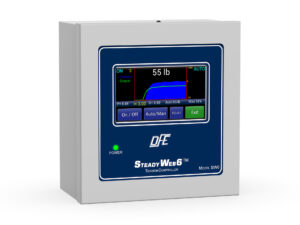
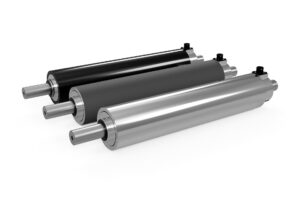
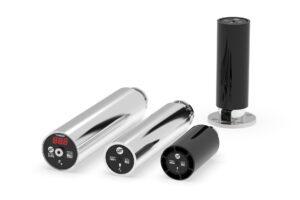
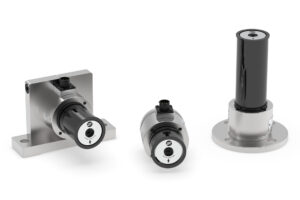
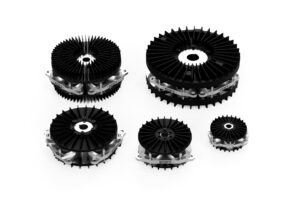
Dover Flexo Electronics industry-leading solutions, including the Tension Roll® Transducer, SteadyWeb 6™ Controller, and Model C Series Transducers, empower manufacturers to optimize these processes, delivering measurable improvements in quality and profitability.
By investing in DFE’s tension control technology, technical textile producers also leverage the experience of DFE’s team of applications engineers, dedicated to achieving high-performance results tailored to the customer’s specific manufacturing process.
A typical DFE tension control solution includes a closed-loop controller (e.g., SteadyWeb 6™), a load cell (e.g., Tension Roll® or Model C transducer), and a brake or motor drive system. These components work together to deliver precise, repeatable tension that technical textile applications require.
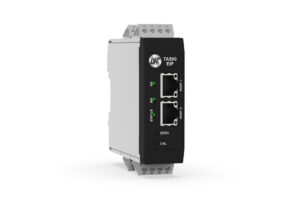
For manufacturers integrating with PLCs, DFE offers tension amplifiers with analog or ethernet connectivity, such as the TA1 and TA500, enabling seamless data collection and process monitoring.